The Pinky Ring
One of Las Vegas’ highly anticipated openings this year was Bruno Mars’ The Pinky Ring cocktail lounge and live music venue at the Bellagio Hotel and Casino.
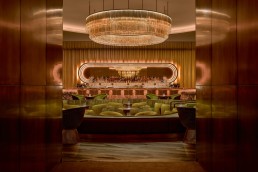
Designed as an opulent adult playground, The Pinky Ring immerses patrons in an alluring ambience reminiscent of a 1970s private penthouse party.
Bruno Mars, an iconic musician with a strong sense of style, needed a design studio that would match his level of detail for aesthetics. He brought renowned global design studio Yabu Pushelberg on board to bring his vision of a new hospitality destination in Vegas to life.
With an exclusive story on the lighting concept for the venue, darc’s editor Sarah Cullen caught up with George Yabu and Glenn Pushelberg, founders of the eponymous studio.
“Bruno had been searching for a design partner for The Pinky Ring for some time,” explains Yabu. “Together, we had a clear vision of the ambience we wanted to create: a sexy, smouldering cocktail lounge and jazz bar. We were introduced through MGM in September of 2022 and the project took off from there. It took about a year and a half to complete and opened in February on Super Bowl weekend, which was held in Las Vegas.”
Pushelberg adds: “Bruno was involved in the design process from start to finish. He wanted to create an adult playground reminiscent of a 1970s penthouse party, drawing from the legacy of The Rat Pack, Sammy Davis Junior, and Silk Sonic. The Pinky Ring is just that.”
“There was a clear vision for The Pinky Ring from the start — not just in how the space should look, but how it should feel,” elaborates Yabu. “The final design stays true to the original concept.”
From the moment you enter The Pinky Ring, a huge amount of consideration was taken into account to preserve the full experience of the space. Guests are greeted by a circular screen façade that protects the venue from external factors such as casino lighting and sound. Upon entry, guests are swept into another world that begins through a dimly lit mirrored passageway, outfitted with Bruno Mars’ Grammy Award collection. The corridor offers a visual palette cleanser from the outside noise of Vegas, taking inspiration from contemporary museum design, the display offers a discreet and soothing atmosphere.
“Crafting a simmering prelude to the bar and lounge, the arrival serves as a vestibule to entertainment,” describes the studio. “Guiding guests along an enticing arrival pathway, it seamlessly leads to the heart of The Pinky Ring sunken conversation pit, the centrepiece of the 5,000sqft space. See or be seen, each area is composed of its own suave and purpose that echoes into the next.
“With a clear direction for how The Pinky Ring should not only be seen, but felt, lighting played a crucial role in establishing the aura and atmosphere. In the pursuit of perpetual allure, where lighting not only transforms spaces, but perceptions, The Pinky Ring unveils a strategic lighting innovation, schemed to make people look and feel their best. Through a strategic interplay of low-level, contrast, and accent lighting, The Pinky Ring lighting design unveils the unseen.
“Circles are key symbols throughout the visual language, representing Mars’ records, awards and accolades in an abstract and tasteful way while alluding to visual nods of Palm Springs residences.”
The role of decorative lighting was an important one in achieving this desired aesthetic. “We wanted guests to feel sexy,” explains Pushelberg. “A huge part of this is the way we lit the space, so we turned to music video lighting as inspiration.
“Our lighting scheme emits the perpetual allure - it doesn’t just transform the space, it transforms perception. We wanted guests to look and feel their best.”
Yabu adds: “In music videos, people look good 100% of the time. We achieved this at The Pinky Ring by using low-level lighting positioned close to the ground. This approach allowed us to create the desired aesthetic and ambience, channelling the energy of a 1970s private penthouse party, just as Bruno had envisioned.”
“We wanted to create a distinctive lighting language that transforms the ambience throughout the course of the evening,” says Pushelberg. “When guests first arrive, they are welcomed into a warm, inviting atmosphere. As the night progresses, the environment transitions into a dynamic, vibrant setting with dramatic colour changes, perfect for dancing.”
Yabu continues: “We used the latest lighting control technology, DMX, as a system that allows multiple fixtures to be affected by a single controller. DMX lighting uses a data signal to control the intensity, colour, and other parameters of LED lights. We used LED lighting because of its adaptability. LED lighting is not only versatile and energy-efficient, but it’s also capable of controlling precise colour, temperature and intensity changes. The combination of these two technologies enabled us to create an immersive, customisable lighting experience, allowing us to achieve the music-video style lighting we were aiming for.”
“In terms of bespoke lighting, Lasvit created a custom chandelier that was designed as a replica to the chandelier that resides in Bruno’s Vegas home and hangs above the Conservation Pit,” adds Pushelberg.
The pair describe the design plan for the venue as a “performance in its own right” that pulled away from the gambling lifestyle of Las Vegas. “Yabu Pushelberg emphasised that rather than building a relationship to the happenings of the casino, it was their role to conceal it. Instead of having direct views from the casino into the bar, the studio created a strategic design plan that transports guests away from it,” explains Pushelberg.
Yabu adds: “The journey begins upon arrival, where guests are greeted by a circular screen façade, protecting The Pinky Ring experience. On the other side is the VIP booth, where we added linear grazer uplights to frame both sides of the rings. Once inside the lounge, accent lighting is woven throughout: concealed in the ceiling cove, under the countertops, in the bar shelf, and below the planters. We also added table lamps and a custom Lasvit chandelier to bring the space to life.
“The Champagne Room is one of our favourite areas; it’s intimate and secluded but has a perfect view into the lounge. We used adjustable accent lights here to spotlight the champagne bucket.
“We placed accent lights strategically to highlight and invigorate key design elements, like the lighting in the arrival corridor showcasing Bruno’s Grammy collection, but in a non-bombastic way. In the later hours, the contrast in lighting brings a new energy and vibrancy to the space, with the hues seamlessly shifting to create an ever-evolving visual experience.
“We have built and nurtured a team of talented lighting designers, who have been a part of our studio for more than five years. They help us bring our imagination to life. It is the unspoken and most impactful layer to projects. For clients who choose to bring our lighting service onto a project, like The Pinky Ring, it allows us to take the design process a step further, offering a more holistic approach overall.”
When it came to challenges on the project and with working alongside a very high-profile client, surprisingly there seemed to be very little the team couldn’t work out together.
“One of the design challenges we had was figuring out the right elevations for the Conversation Pit. It’s the centrepiece of the lounge, so we wanted to make sure it captured the attitude of the space while remaining elegant and functional.”
Pushelberg adds: One time during the creative process, Bruno was determined to go with a certain design direction that we did not feel was the best choice. Instinctually and in typical George fashion, he said: “No, no, no, no, no”. I think Bruno was initially taken aback by his response, but he appreciated the feedback and sincerity.
“Flash forward two weeks later when we were together in person, Bruno delivered the most bang-on impersonation of George: “No, no, no, no”. You have to have fun with one another. We are on the same team.”
“It was a joy to work with Bruno,” reflects Yabu. “He has a clear sense of who he is and what he wants, which made the design process smooth. He was open to collaboration and doing what is best for the project.”
With no structural constraints restricting lighting placement, it was just important for the team to ensure the decorative lighting “brought cohesiveness to the space”.
“As guests walk through each area, they can see and feel the fluidity from one space to the next,” explains Yabu. “The architectural and decorative lighting were designed together to create one layered, unified experience.”
Overall impressions of the completed project are positive ones all around. “The Pinky Ring exudes a slow-burn sexy feeling,” says Pushelberg. “Sexy can often be too obvious or cheap, but when you listen to Bruno’s music - it’s slow-burn sexy. That feeling is captured in the final design.
“We took on every aspect of the project, from interior design and lighting to styling, making sure to incorporate Bruno’s input along the way. Bruno kept things moving forward, and we had the most fun entering one another’s orbits, riffing ideas. This level of holistic involvement, and working so closely with Bruno, is what made the project stand out.”
If they could have changed anything, would they?
“I would have brought this project to life in the 70s, during the Studio 54 era,” adds Pushelberg. “There’s no way to fully recreate the energy of that time, but the closest we could get was by implementing a no-phone policy. There is freedom that comes from privacy that allows for deeper intimacy that disappears the moment someone pulls out a phone. We wanted to preserve that so people today can experience what we could at Studio 54.”
Materials: FW 24 Poldina Zafferano x Momonì
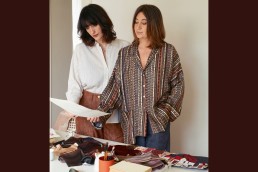
Momonì and Zafferano, both Veneto region-based brands, have come together to create an elegant second collection of Poldina portable lamps, with designs that take inspiration from Japan.
Following its successful collaboration during Milan Design Week 2024, Zafferano has teamed up again with Italian fashion brand Momonì to create a second collection of customised Poldina wireless table lamps.
Zafferano’s Poldina is well-known for its ability to be customised in various colours and artistic collaborations, from graffiti artist Mr. Savethewall, Peanuts (comic strip art originally by Charles Shulz in 1950), and British fabric studio Fermoie.
The new designs from Momonì’s FW 24 collection are printed onto the metal covers that transform the simple portable lamp into a piece of art.
“The strongest visual identity to convey the Momonì brand is tied to silk prints, a recurring theme that evolves each season based on the moodboard and defines the collection’s imagery,” explains the luxury fashion brand.
“Born in the Veneto region, Momonì has absorbed the historical influence of nearby Venice into its DNA, immediately identifying itself with the collective imagery of the “Silk Road”, known through the legendary Venetian merchant Marco Polo. Marco Polo’s iconic journey bridged the gap between the Occident and the Orient, serving as a symbol of the convergence of ideas, people, and cultures. Momonì is a brand that expresses sensory, emotional experiences and celebrates multicultural coexistence within its collections.
“The aesthetics of Momonì’s patterns this season are inspired by the hidden beauty of Japanese traditions: unique motifs and colour schemes reflect the essence of a creative vision that explores elegant shapes and precious fabrics, while further enhancing a useful and original product, making it even more captivating.”
“In this creative journey, where Italian design meets the art of fashion, the customised version of the Poldina battery lamp embodies the shared vision of two Italian brands: to bring joy and originality into everyday life.”
The new Momonì FW 24 Poldina collection is available as two items, one being the portable, rechargeable lamp in four colours, each paired with a metal cover printed in a matching pattern, and secondly the standalone patterned cover that can be used to personalise an existing lamp.
“Zafferano’s expertise in the world of home design made it the ideal partner to diversify our business, supporting its debut in a sector perfect for welcoming and translating our DNA,” says Michela Klinz, Momonì’s creative director. “We both have roots in the Veneto region and share a history of creativity built around values of authenticity and heritage projected into the future, which guarantee high-quality products, distinguished by their design and craftsmanship content.”
Federico de Majo, founder and president of Zafferano, adds: “Our inclination to capture and develop stimuli from different worlds found its perfect complement in Momonì and their shared creative approach, translated into an exclusive offering that embodies elegance, style, and functionality. This partnership allows us to showcase our great customisation ability, using motifs of great beauty and charm.”
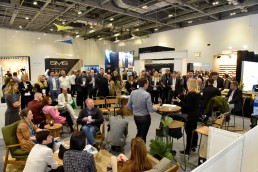
CSI Europe opens registration
(UK) – Running from 4 - 5 December at ExCeL London, the event will include Speed Networking, Lunch & Learns featuring interviews with industry experts and Q&As, plus more.
The two-day event promises to connect everyone across the cruise ship interiors supply chain with the people they most want to work with. The show will also include a new opportunity for new-to-cruise suppliers - Pitch & Pint, a comprehensive conference featuring speakers inside and outside the cruise ship interiors industry.
This year’s show will debut a new zone, Hospitality@CSI, comprising 20 exhibitors and a dedicated schedule of content, which recognises the ways that hospitality interior design works in tandem with hospitality products to shape guest experience, improve efficiencies, and deliver brand identity to each guest.
Cruise brands are investing in top tech to deliver sea-exclusive experiences. Launching this year at CSI Europe, the Cruise Xperience Innovation Summit (CXI) will connect suppliers and buyers wanting to create seamless, standout services.
Cruise Ship Interiors (CSI) Awards are back on December 5, marking five years of celebrating excellence in cruise interiors from small ships to sustainable designs. New award categories include Best Onboard Experience, Best Refurbished Space, and Galley Innovation of the Year.
Register here for a two-day pass: https://eventdata.uk/Forms/Form.aspx?FormRef=CSIC4Visitor&TrackingCode=RegOpenPR
www.csieurope.com
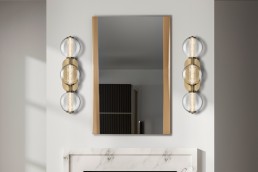
Elstead - Atomo
Featured is the three light Atomo wall light from Eurofase, Canda. This family of ceiling pendants and wall fixtures include hand blown glass spheres and a proprietary LED lamping called Crystal Pitch. Faceted crystal gears surround the LED light source to emit refraction within the crystal glass globe. The wall lights are IP44 rated for use in the bathroom as well as other interior settings and they are available in Polished Chrome or Gold finishes. See these products and much more on the new quintiesse website.
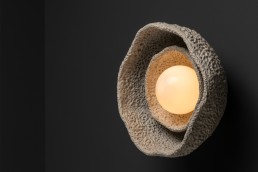
Design Mumbai announces inaugural show
(India) – India’s first international design show will be showcasing at the Jio World Garden in Mumbai from 6 – 9 November 2024.
Over the four-day event visitors can expect to see an array of industry leaders alongside a curated selection of the country’s independent designers and makers.
Ian Rudge, Co-Founder of Design Mumbai, says: “This event marks a significant milestone for India, offering an international platform unlike anything seen before. We’re bringing a whole host of innovative and pioneering designs to the show, along with specially commissioned installations from key partners such as JSW Paints and Royal Enfield, and exclusive appearances by some of the most recognised names in the industry. At the same time, we’re committed to celebrating India’s rich design and craft heritage. That’s why we’ve handpicked a remarkable range of homegrown talent, providing a global stage to showcase their work and craftsmanship.”
Special design features, awards ceremonies and networking events will also be highlights of the show. Presenting partner, JSW Paints, India’s leading environmentally friendly paint company, will add to the visual experience of the event.
Design Mumbai will host a three-day schedule of live industry talks and keynotes featuring some of the leading voices from both within and outside India. Topics will range from sustainability to manufacturing and digital transformations. Confirmed line-up includes Dezeen, STIR World, Dutch industrial designer Richard Hutten, and key spokespeople involved in Mumbai’s ongoing $30 billion infrastructure projects.
Also featured at the show will be a brand-new concept hospitality space by The Park Hotels in collaboration with Udaipur-based architecture firm Studio Saar. Visitors can also indulge in food and drink experiences with award-winning restaurants and bars, including a Soho House Mumbai restaurant, that will bring a culinary respite to the show.
A high calibre of brands will exhibit at the show, including a range of established lighting brands, such as Brokis, Catellani and Smith and Martinelli Luce. India-based studios featuring lighting include Shailesh Rajput Studio, Loco Design, and Ek Kalakaar Designs as well as Jaipur-based AKFD Studio who specialise in bespoke furniture and lighting.
Rudge adds: “Our goal with Design Mumbai is to deliver top-tier quality and originality to the architecture and design community. We aim to provide a unique experience and a diverse mix of content, whether attendees are specifying for a private residential project or a commercial venture such as a hotel or restaurant. We look forward to welcoming everyone at our event in November."
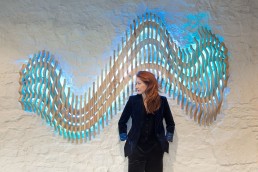
Frankie Boyle's Intra-spectrum to feature at LiGHT 24
(UK) - Intra-spectrum, Frankie Boyle’s latest creation will shine at LiGHT 24. The artwork, powered by formalighting, invites all to embrace wisdom through light and colour.
The installation will take place at the Business Design Centre in London from 20 - 21 November 2024.
Combining scientific inquiry with creative expression, Boyle’s’s work is distinguished by her mastery of physics, colour theory, and the psychology of perception. Her installations explore the intricate interplay of light and emotion, creating immersive environments that prompt introspection and self-discovery.
Cultivating her heightened sensitivity to light and deep understanding of human behaviour, her latest upcoming installation, titled Intra-spectrum, has taken inspiration from her recent explorations of the narrative of consciousness and subconscious within her body of work through the harmony of reflection and refraction.
Boyle says: “I want people to immerse themselves within the light that we shine and the light that we hold within through an array of beautiful invigorating colours. This installation is all about eliciting introspection and connection.”
This relationship with colour is something that Boyle wanted to particularly focus on during Intra-spectrum. Colour theory is a fundamental concept in art, design, and psychology that helps explain how colours interact, how they can be harmonised, and how they affect human perception and emotions.
Boyle believes that as children we are attracted to colour as our eyes are more sensitive and stimulated by brighter colours, yet as we grow older, we start to eliminate colour from our lives because we associate it with immaturity and youth. Her work aims to “reignite those rich emotional experiences that influenced how we felt, thought and behaved through play when we were younger”.
To create the kaleidoscope of various colours in this artwork, Boyle is using dichroic film; a material that exhibits different colours when viewed from different angles due to interference of light waves - creating a colour-shifting effect. This phenomenon occurs because the film selectively reflects and transmits certain wavelengths of light while others pass through, creating a multi-colour appearance depending on the observer's position.
The concept of light has heavily influenced Boyle’s work as an artist. She has shared her experiences of growing up as a neurodivergent person, who used light as a communication tool from a very early age.
Boyle adds, “Light and human behaviour were definitely the first languages I understood. That is why I am so interested in the human response to my work, physically, psychologically and emotionally. Ultimately, light is a language that everyone speaks that taps into the subconscious, connecting us to a space.”
Visitors to LiGHT 24 will be able to view the exclusively created art installation ‘Intra-spectrum’ by Frankie Boyle, which is powered by formalighting. The installation will be found in the space between the main exhibition and the conference hall, where it will aim to ignite and resurface memories and emotions as visitors move through this space.
Discover more about Frankie’s work here: https://www.frankieboylestudio.com/Find out more and register free for LiGHT 24 here: https://www.lightexpo.london/
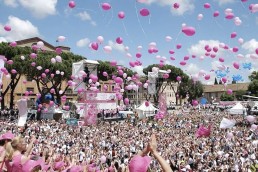
Slamp continues fight against breast cancer
(Italy) - Slamp supports the fight against breast cancer by working with Komen Italia, a leading group in women's health, for its 4th year.
Slamp turns Pink to bring hope: their donations and light creations, along with support for the Pink Tie Balls in Rome and Naples, have helped Komen Italia increase its efforts. This includes more Prevention Days to promote women's health. Komen Italia is a volunteer-driven group active nationwide, raising funds for breast cancer projects.
Since 2000, it has invested over 26 million Euros into:
- 180 research grants for young doctors in Italy and abroad.
- 1,200 Women's Health Days, offering free exams to 265,000 women in 17 regions.
- Support for 350 associations promoting health projects across Italy.
Founded in Rome, Komen Italia now operates in seven regions and collaborates with over 100 cities through a network of volunteers and "Friendly Associations." Celebrities like Maria Grazia Cucinotta and Rosanna Banfi are among those who passionately support the group.
Komen Italia is also a founding member of Think Pink Europe, a network of nonprofits that organises the Race for the Cure programme across Europe.
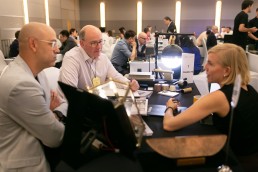
[d]arc session Asia 2024
This year marked [d]arc media’s first venture across to the tropics of Thailand for the inaugural [d]arc sessions Asia, located at the beautiful Le Méridien Phuket Beach Resort.
Situated a short drive from the infamous hustle and bustle of Patong (more on that later), Le Méridien is a contrasting tranquil destination sat on the shores of the warm Andaman Sea.
Following the success of the previous six editions of our exclusive networking event, the seventh [d]arc sessions did not disappoint. With suppliers and specifiers traveling from far and wide to the Thai island, this event was positively buzzing with new connections being formed and old friends reuniting.
This September, a total of 120 delegates came together to exchange product designs and projects for specifying from across Asia, the Middle East, Australia, and New Zealand.
Across the three days, the event followed its usual format of interspersing its speed dating-style meetings between lighting designers, interior designers, and architects with suppliers, with informal panel discussions where audience members were encouraged to participate and share thoughts and questions with the room. Topics for these sustenance sessions included “Justifying the cost of high-end European fixtures in a client centric design in Asia: The challenges of justifying the high cost of light fixtures from prestigious brands in a market increasingly dominated by budget-conscious clients” with panellists Maneck Tandon, ATPL Architects; Courtney Mark, Studio Mark; Regina Santos, Lightfusion, and David Skelley, DJCoalition. Secondly was “The impact of international partnerships and global standards on lighting design in Asia: The challenges and opportunities of aligning with international norms and studios while respecting regional differences”, with panellists Amornrit Pituck, Gooodlux; Said Sawaf, Umaya; Surbhi Jindal, Da Light Hub, and Momena Saleem, Worktecht. And thirdly, “Tackling light pollution in Asia: The role of lighting designers in urban and public illumination”, with panellists Yusuke Hattori, Ambiguous; Mohannad Al-Salkhadi; Cyril Lamy, Scenolight Atelier, and Jinkie De Jesus, Light Plan Inc.
Our Keynote session was delivered by Eugenia Cheng of LightOrigin Studio. She discussed her fascinating project, the Artifact Bar in Hong Kong, which won this year’s Best of the Best [d]arc award. The unique hospitality venue brought many challenges with it, such as very low ceilings and no natural daylight. Cheng and her team worked closely with the project’s interior designers NC Design + Architecture and leant into the space’s cave-like atmosphere to create contrasting and dynamic lighting effects.
At the end of each day’s intense yet productive meetings, delegates had time to recoup by the poolside or soak up the evening sun on the resort’s white, sandy beach. Then, everyone gathered to continue conversations and networking across the evening meals and drinks receptions, set in picturesque locations across the resort.
Our final evening was spent at the beautiful Fuga beach club and restaurant in Patong, where guests were treated to a spectacular fire art show and even had the opportunity to dabble in the flames themselves.
As the busses arrived to shuttle guests back to the hotel, there was an optional stop half way at Bangla Road, for those who wanted one final hurrah in the clubbing district. However, the first bus continued past the party streets and headed home. Nevertheless, the party spirit had not gone to bed just yet, as we were treated to a karaoke rendition of A Whole New World by Nicholas Ong-Lewis of Delta Light, which got (almost) all of the passengers singing their Disney hearts out together. darc magazine’s editor Sarah Cullen has video evidence for those that want to see…
The next [d]arc sessions events have been announced for Europe 6 - 9 May 2025 at the Melia Hotel, Ibiza, and Asia 14 - 17 October 2025 at the Pelangi Beach Resort + Spa Langkawi, Malaysia.
darc’s editor hosts panel discussion at Decorex
(UK) – Decorex completed its 46th edition of its show held at Olympia Events, London, between 6-9 October.
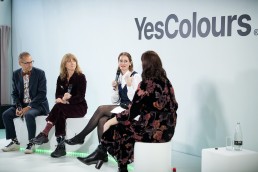
This year’s event hosted a packed schedule of design talks and sustainability discussions, offering a wealth of knowledge from over 85 speakers. darc’s editor Sarah Cullen was invited to host a panel discussion in the VIP lounge this year. The VIP Lounge was designed by paint brand YesColours around the concept Synesthetic Studio. Featured throughout the space were lighting pieces from Curiousa and Houseof studios.
Titled ‘Illuminating Spaces: The Power of Lighting in Crafting Mood and Atmosphere’, Cullen was joined by her panel Helen White, Co-Founder of Houseof, Esther Patterson, Founder of Curiousa, and Matteo Bianchi, Founder of Daruma Studio.
The discussion incorporated Bianchi’s expertise in interior design and Patterson and White’s experience in product design to address approaches and challenges to lighting various types of space, along with techniques used to create atmosphere. Some of the questions touched on approaches to colour temperature, lighting intensities, product placement, product flexibility and user-friendliness. Taking a couple of segways into the topic of sustainability, the 1-hour discussion touched on numerous ideas within the subject of lighting and interior design while also considering conscious design choices for people and the planet.
Cullen also encouraged audience members to get involved throughout the session, opening the discussion to the floor to pose questions to the panel and share experiences they have encountered.
The next edition of Decorex will return to Olympia Events 12-15 October 2025.
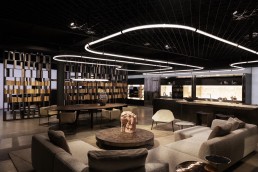
Henge opens London flagship store
(UK) - Italian high-end furniture and accessories brand opened the doors to its new flagship store in Chelsea, London coinciding London Design Festival.
The 600sqm flagship perfectly embodies the Henge style, with a curated showcase of the latest collections and iconic pieces of the brand. The space, featuring four living areas, includes two kitchens, sculptural lights, and several boiseries.
The opening marks a further step in the global expansion of the brand and thus becomes a corporate space on the same level as the Milan showroom, serving as a new Henge hub for architects and clients around central and northern Europe.
Key Novelties showcased in the show include the new exclusive Floyds Lights Series in collaboration with Venini and designed by Ugo Cacciatori and composed of four blown glass lights produced in Murano; Opera by Massimo Castagna, the latest sculptural kitchen elegantly embellished with a marble stone that plays with volumes. The Sapiens and Sirius systems and the Spectre modular bookcase by Massimo Castagna.
Paolo Tormena, CEO of Henge, says: “This opening marks a major milestone in Henge's consolidation in the international market. London is an important hub in the design world and also holds significant value as a key link to our esteemed clientele on a global scale.”
www.henge.com

Terence Woodgate
Iconic product and furniture designer Terence Woodgate sits down with darc’s editor Sarah Cullen to chat about his career, design inspirations, and memorable collections that he has created over the last 21 years as an official Royal Designer for Industry.
Terence Woodgate is a well-respected British industrial designer who obtained Royal Designer for Industry (RDI) status in 2003. However, being a furniture and product designer was not on his initial career path.
Speaking with Sarah Cullen, she discovers more about the designer’s past, creative influences, and future endeavors.
Woodgate grew up in the beautiful Parliament Hill area in Highgate, London. Here, he attended the Gospel Oak primary school where he majored in art. At the end of his primary education, he failed his 11+ exams and went on to attend Holloway Comprehensive School, which upon reflection was something he sees as a positive outcome: “It was probably for the best as I would not have enjoyed grammar school”. For context, secondary modern schools were a type of secondary school that existed throughout England, Wales and Northern Ireland from 1944 until the 1970s under the Tripartite System. Secondary modern schools were designed for most pupils between the ages 11 and 15; those who achieved the highest scores in the 11+ were allowed to go to a selective grammar school, which offered education beyond 15. It wasn’t until a little later in life in his 30s that Woodgate was diagnosed with Dyslexia, which could have been a possible influencing factor on his educational direction.
Post secondary school, Woodgate went on to study engineering at Westminster College before beginning work as a petrochemical design engineer in Belgium, creating oil rigs and nuclear power plants. “While in Belgium, I visited an exhibition on The Bauhaus at the Stedelijk Museum in Amsterdam, which had a massive influence on me. The Grand Comfort chair by Charles-Édouard Jeanneret, known as Le Corbusier, blew me away. The idea of having an exterior structure in polished steel tube, holding soft leather cushions was exciting. It was totally different from what I grew up with and I wanted to create work like that myself. Also, the Lights by Walter Gropius were wonderful, stunning and still relevant today.
“Visiting an art gallery continues to have the same effect on me; after a while I want to run back to the studio and create new work!”
Following his stroke of inspiration attending art galleries in Belgium, in the mid-1980s Woodgate retrained as a furniture designer at the London Guildhall University before opening his own studio in East Sussex, UK, 1988.
Since then, blending his technical engineering training with his appreciation for refined aesthetics, Woodgate has established himself as a contemporary designer that describes his aesthetic as “modernist/minimal”. He adds: “I am more interested in subtraction than addition. I don’t add decoration for the sake of decoration, instead preferring to focus on form and texture.
“[When it comes to designing] influences are everywhere for me. When offering advice to design students, I always encourage them to look outside their chosen discipline for inspiration, e.g., architecture, jewellery, racing cars, art. For me, art is probably the most important influence.”
As his studio began to grow, so did the recognition for his designs and his collection of accolades. A mere 15 years after establishing Studio Woodgate, in 2003 he was awarded his RDI as well as the German Red Dot ‘Best of the Best’ Award, IF Ecology Award, and Observer/Elle Decoration Design Award for Furniture. Not long after, in 2008 he also won the Wallpaper* Magazine Design Award.
Over the years, Woodgate’s portfolio of clients has also grown to include brands such as Case, Concord Lighting, Established & Sons, Objekten, Punt Mobles, RVB and SCP. Examples of his work are now held in private and permanent collections such as the Museu d’Arts Decoratives, Barcelona, and the Victoria and Albert Museum, London.
Speaking of some of his most notable moments in his career to date, Woodgate says: “I designed several lights for Concord Lighting that were all speculative, i.e. not commissioned. Notably, Infinite and LED 150 were significant designs. Infinite was a low voltage collection with straight and curved track structures where fittings could be added to the top and bottom. It won various important design awards including the German Red Dot ‘Best of the Best’.”
Ahead of the curve with project circularity, Woodgate’s LED 150 was designed with longevity and flexibility in mind. “LED 150 was a downlight where LED was an acronym for Low Energy Downlight, long before LED light sources were around. It was a holistic design where I focused on benefits for everyone involved be they architects, specifiers, installers, maintenance, or end user. It was flexible in that it could be specified in the knowledge that if the building requirements changed so could the downlight system in terms of optics and aesthetics. The product lit many large projects such as the Petronas Twin Towers and some international airports.
“I would also say my Solid collection for Case is one that I consider notable. The design has now evolved to be portable, which offers wonderful user flexibility.”
When it comes to his approach to designing lighting, Woodgate explains that within all design fields, whether that’s furniture or lighting fixtures, there are particular constraints that need to be considered.
“You need to identify what information you need to start work. When designing an architectural light fitting, you are designing a machine that provides light. Decorative lighting is more about saying ‘look at me’ rather than ‘look at what I do’. And both are valid.
“Lighting can turn a space into something wonderful, be it warm and welcoming like enjoying a whiskey by a log fire, or it can enliven the space and the people within it like a fresh walk in the alps. It can also tell a story and provide a narrative.
“For me, good product design is refinement and engineering beauty either in the design itself or in the effect. It’s the ambiance it produces.”
Looking at the relationship between architectural and decorative lighting, he believes “each has a definitive role to play”. He continues: “Personally, I love the technical challenges of architectural lighting, and I love the freedom/liberty of decorative lighting.”
When it comes to challenges within design, Woodgate is self-proclaimed impatient by nature, stating that the time it takes between design concept to production and finally to reward is the most frustrating part about working in the world of design.
Speaking of one of the best developments in the industry, like many designers who work with lighting, he claims it is the revolutionary introduction of LEDs. “[They] are amazing and have changed the industry. The energy saving aspects and the fact that they are emitting light at such low operating temperatures is excellent. Tuneable white light LEDs are particularly fantastic, but personally, I am not a fan of colour changing LEDs.”
One of Woodgate’s long-standing brand partnerships is with Case, a British furniture, lighting, and home accessories brand established in 2006 by British designer Paul Newman.
“I have known and respected Case for many years and the team has impressed me with their energy and enthusiasm. They have grown and are now a successful international producer with an intention to expand its decorative lighting. Case commissioned me to design a collection of floor and table lights, which is called Soft, due to its soft form of the traditional tapered shade. Made in Poland in mouthblown, three ply opal glass, it provides a beautiful, soft ambient light.”
The Soft collection’s elegant, rounded conic glass shade takes the centre stage, which is acid-etched to produce a diffused, gentle light. With a three-step touch control to dim the light, the collection is versatile and suitable for use in residential, office and commercial environments.
“Working with light is always an exciting experience, because you never really know light and how it will perform.”
What can we expect from the designer next? A new collection of wall lights appears to be on the horizon… “The wall lights are currently a speculative design without a manufacturer in mind; it is one of those designs that has been on my board for a while. As I am now living in Girona, I think I would like to approach a Spanish brand.”
www.studiowoodgate.com
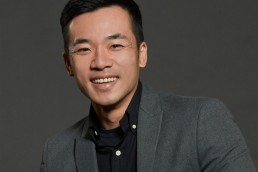
Kevin Chung - AB Concept
Kevin Chung, Design Director at AB Concept, discusses the importance of decorative lighting in an F&B environment, highlighting the considerations to the architecture and referencing recent projects case studies.
Decorative lighting is the soul of a space; without it, the environment can feel lifeless and uninspired. In nearly every project, especially in restaurant and bar designs, we would want to collaborate with a highly skilled and capable lighting designer.
Today, restaurants and bars are more than just places to eat and drink—they are immersive experiences where lighting significantly shapes the overall atmosphere. Consider the effort and creativity a chef invests in crafting a dish that is both visually stunning and delicious. The role of the lighting designer is to enhance and showcase this artistry. Poor lighting would not only fail to do justice to the chef’s work but also detract from the intended dining experience.
In many of our projects, decorative lighting serves as the primary light source throughout the interior. We believe that decorative lighting is a critical component of the overall design, both visually and aesthetically. As a result, we would custom design every piece of lighting within the restaurant to ensure it complements and enhances the space.
In projects involving heritage buildings or those meant to convey a classic narrative, the role of decorative lighting is particularly significant. These spaces demand a lighting approach that both honours the architectural integrity and aligns with the historical context. We are always very careful to avoid the use or hiding of visible architectural lighting, such as downlights, that do not correspond to the architectural era. We believe it is essential to maintain the authenticity of the design by adhering to the lighting conventions of the period.
We deliberately limit the use of architectural downlights, using them only when absolutely necessary for function. This approach often ends up requiring custom design of almost every light fixture in the space, allowing us to create a cohesive narrative that not only respects the building’s history but also enhances its aesthetic integrity. With the sole purpose that the lighting design not only complements but also elevates the overall experience, preserving the character and essence of the original architecture.
One of our recent projects, the all-day dining restaurant, Yun He, at the Four Seasons Hotel Suzhou, is nothing short of an architectural gem. The space is designed with soaring ceilings and expansive window glazing, allowing an abundance of natural light to flood in. This design choice brightens the interior and provides guests with breathtaking views of the hotel’s meticulously landscaped gardens, creating a tranquil and picturesque setting that elevates every dining experience.
The restaurant’s interior lighting has been carefully crafted to adapt to the natural rhythm of the day, ensuring that the ambiance remains inviting and harmonious, whether guests are enjoying breakfast at dawn or dinner at dusk. Lighting transitions are designed to seamlessly shift from one hour to the next, offering a gentle, warm glow that complements the restaurant’s sophisticated décor. The decorative lighting elements are custom designed to subtly weave into the experience, telling a story of timeless elegance, crafting a unique and memorable atmosphere that leaves a lasting impression for visitors.
In another of our projects, the Mei Li, which is an award-winning restaurant within the Grand Hyatt Hotel, Kuwait, we pushed the boundaries of interior design to create a space that is both visually stunning and culturally resonant. Drawing inspiration from the rich traditions of the Peking Opera, the restaurant features intricate designs and towering ceilings that evoke a sense of grandeur. Central to the experience is the dramatic decorative lighting, which plays a crucial role in highlighting the exquisite details of the space. The lighting casts a captivating glow, accentuating the artistry and craftsmanship that define Mei Li. The abundance of decorative lighting not only enhances the presentation of the Asian culinary delights but also immerses guests in a sensory journey, where each meal is transformed into an unforgettable experience of taste, culture, and artistry.