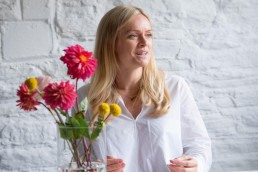
Light Pollution within our Workspaces by Sarah Dodsworth
When we look at lighting in the UK, especially compared to other European countries, it’s hard not to think we have an obsession with over-lighting. From the proliferation of motorway and streetlights to the chaotic myriad of illuminated building signs, we seem to believe more is more at every stage. Then, when we get inside buildings, the mania reaches a whole other level.
There’s obviously a wider discussion to be had here about light pollution, human health and the impact of over-lighting on wildlife and the environment, especially seeing how much wildlife returned to our built environments during lockdown. Some areas of the UK are notably starting to introduce measures right now to protect the environment through a dark skies policy. From the point of view of an interior designer, however, I’d like to focus on how we use light in building interiors. The workplace is especially moot as a subject area, given hospitality offers a much cleaner canvas in terms of freedom to design around the creation of mood and ambience.
My greatest frustration, as a specialist in the workplace arena, is how hard it is to influence schemes when there’s already a huge trail of custody in place before we even get to the briefing stage. What we’re always looking to achieve overall is a unique, tailored and special office environment that expresses the precise culture of a particular client or business. When it comes to lighting, we seek to layer schemes with fittings of differing visual styles and types that address all planes of an interior space – the ceilings, walls, floor and surfaces. Our focus is on lighting the actual workspace rather than the whole space, not only as a practical response to how and where light is needed, but also to embody a sustainable approach. Excess is simply not justifiable at any level!
As our understanding of people at work evolves, we also now look to deliver schemes that support agility, work missions, personality types and neurodiversity. All of which takes us in the same direction – towards specific designs offering specific solutions to specific challenges. Social and high energy spaces need to be punchier in terms of illumination levels, for example, while quiet, focussed areas should be more subdued, with neat integrated details and more often than not a task lamp the user has the choice to use - or not. It all sounds rather simple, doesn’t it? And yet we are still at the mercy of so many factors that limit our ability and imaginations.
What lies in our path? First, the fact that building technical lighting design solutions in Cat A projects remain heavily influenced by engineers who design solutions that conform to building regulation standards and CIBSE guidance. Not their fault, of course. These are the standards developers and clients are advised to adhere to - and statutory ways always seem to win out. We acknowledge totally that there are a huge amount of technical considerations to resolve, but often the end result is over lighting, with too many fittings in a strictly regimented format, leading to a stark, flat and generally uninspiring interior. Not only is this uninviting, but it can create an overwhelming experience, visually and sensorially. As a person who suffers from migraine auras, this is particularly pertinently-felt.
If building regulations clip the wings of possibility, ceiling heights are the compounding frustration. When we start on a scheme in a new-build environment, it’s incredibly difficult – not to mention very off-message commercially and sustainably - to suggest a complete strip-out of perfectly good, recently-installed CAT A interior infrastructure, which unfortunately often includes built-in ceilings.
Where is the space for change? The biggest change needs to come in the domain of building regulations, so this is our call-out first of all for amendments in favour of a clearer understanding of progressive, creative solutions that reflect contemporary thinking around wellbeing, sustainability, ways of working and creative excellence.
Secondly, we need more comprehension and willingness to experiment on the part of developers. The good news is we are beginning to see just that, especially in London, where, in spite of my Northern pride, I have to admit the waves of change often begin! Of course, developers need to show potential Cat B clients something a little more literal and indicative than a shell and core environment sometimes, just as a show flat sells empty residential apartments. If a developer only fits out one or two floorplates of a larger building, however, they can still achieve this, while at the same time creating a freer creative canvas for interior – and lighting – designers to work their magic and fulfil a huge variety of micro interior workspace briefs.
A clearer vision of how natural and artificial lighting can work together in an optimal way can be seen by taking a trip elsewhere in Europe – particularly to Scandinavia. Having viewed a number of excellent schemes there recently, most particularly in Copenhagen, I was struck by the subtlety and balance of workplace lighting designs, with 50% of light outputs shining upwards to bounce off the ceiling plane, allowing the required amounts of light across the workplace to be implemented in a much more diffuse way. When a pendant is introduced to define a breakaway setting - or an attractive linear fitting suspended a little lower over a coffee island unit - the impact is really effective, defining the space as somewhere a little different and not competing with an already-over lit and visually-fussy space.
We love nothing more than working with amazing decorative lighting designers to respond to culture, function and mood - and being able to use portable task lighting to individualise space even further in a move away from generic and mass effects too. The only problem when task lighting is too good, however? People steal them! Darn - there’s always something, isn’t there?
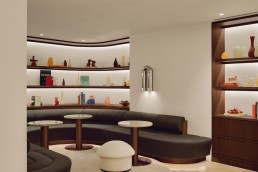
Vogue Hotel, Canada
Montreal-based Sid Lee Architecture was mandated to redesign the common spaces of Montreal’s five-star Vogue Hotel, located in the heart of Golden Square Mile, following its mid-pandemic acquisition by Artifact Group. The renovation of the hotel’s lobby, lounge and restaurant areas brings a brand-new hospitality experience for Downtown Montreal.
Speaking with darc about the project are Martin Leblanc and Jean Pelland, both Architects and Principal Partners at the architectural firm. “Despite the context, the new owners believed in the attractiveness of our beautiful city and wanted to transform the institution to offer Montreal a novel experience that is inspired by their cultural heritage, yet remains connected to its neighbourhood, in the heart of the Golden Square Mile,” says Pelland of their initial involvement in the project. “We first got involved during fall of 2021 and delivered the project during spring of 2023.”
The new aesthetic for the hotel’s spaces is inspired by the grand hotel cultures of Asia and the Middle East. To achieve this, the design team opened up the ground floor areas, which are constructed along a classic colonnade running the length of the hotel. The food and beverage spaces are holistically integrated into the open space, complemented by high ceilings evoking a grand hall atmosphere. Lemay Michaud redesigned a floor-to-ceiling glass façade that floods the space with natural light from the street. There are a number of Turkish design elements integrated as a nod to the hotel’s new owners and also linking in the East-meets-West aesthetic. "To strengthen the ties between the hotel and its neighbourhood, we've relied on a seamless connection between the interior and the exterior. Strategically placing the F&B offering along the glass façade increases opportunities for people to mingle. A user-centric approach, paired with the integration of work by local artists, allowed us to create a unique experience that is as attractive to Montrealers as it is to tourists," explains Leblanc.
Lighting played a key role in the hotel, from the washes of natural light to the statement decorative fixtures. Pelland elaborates: “We crafted the interiors with light as our medium. By softening hard corners and embracing endless free flowing lines, light brushes over the textured surfaces like oil paint on raw canvas. By day, this effect lifts the ceiling with a distinct airiness while at night, warm light emphasises the space's curved sensuality. In this perspective, walls also become objects of light. Whether it be from its form or from the light that it diffuses, lighting allows us to craft ambiances that evolve throughout the day. The lighting programme is part of the initial concept for every interior project on which we work. To create an ambiance, we believe lighting is as important as finishes.
“Dynamic light fixtures highlight the textures and craftsmanship woven into the hotel’s plush interiors, with custom tubular wall sconces designed by Sid Lee Architecture illuminating every corner and curve of the space. The lounge area also features two sculptural light installations from local studio Lambert & Fils' Sainte collection that have been designed to a sizeable scale in collaboration with Sid Lee Architecture. These installations are visible from the street; a local reference that further connects the establishment to its neighbourhood.”
Leblanc continues: “The tubular chrome sconces are found throughout the hotel’s public spaces to link the different areas together. These spaces were designed holistically to offer guests a seamless journey through the ground floor.”
The Sainte collection by Lambert & Fils was originally created in collaboration with Canadian designer Rachel Bussin. The collection reimagines the archetypal rectangle in coloured glass, creating a beautiful floating sculpture suspended by nylon ribbon. The brand describes them as a “collection about the forces that anchor us—a suspension light in dialogue with gravity.”
In each variation of the Sainte design, an aluminium box sits inside transparent glass, casting light up or down depending on the desired mood. The form can suspend from any angle and height, and in multiples.
Speaking of how the decorative lighting works alongside the architectural fixtures, Pelland says: “They both work together to highlight the texture and colour of the meticulously selected materiality and the curls and curves found throughout the public spaces.
“We are used to working with creative collaborators and artists, but the lighting design of the Vogue Hotel was done in-house. That said, we did collaborate with Lambert & Fils Studio, which we also have done for several other projects. Namely, the Sid Lee Biosquare and Hiatus at Place Ville Marie. Their technical expertise and extensive lighting knowledge are extremely beneficial when it comes to custom designing decorative pieces for a project. Moreover, working with a local studio is a great way to keep an establishment linked to its community and create an experience that is as interesting for locals as it is for tourists.”
The outcome of the project was deemed a successful one, despite some of the challenges the team had to face during the Covid-19 pandemic.
“The pandemic created breaks in supply chains which made it difficult to source materials, so we had to come up with creative solutions to find finishes that matched our vision and the client’s desires,” says Leblanc.
“The final design is strikingly close to the initial vision. Looking at the renderings and photographs side by side, we are quite proud to have delivered this level of quality with a strong attention to detail despite the pandemic-related challenges we have encountered in the process.”
Pelland adds: “Sid Lee Architecture works at various scales, from urban design to architecture to interior design but always with a user-centric approach. The Vogue Hotel is no exception. That said, the renewed establishment brings Montreal a novel luxury hospitality experience, one that is inspired by the grand hotel cultures of Asia and the Middle East as a nod to the heritage of the new owners.”
www.sidleearchitecture.com
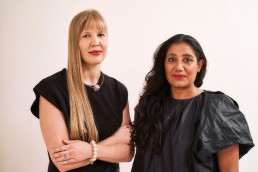
Kaija Wuollet joins Reddymade as Principle
(USA) - Reddymade has announced that Kaija Wuollet has joins New York-based design studio as Principle.
Wuoletts’s role will include managing design work and clients, fostering company culture and mentorship, and continuing to build the strategic business vision.
As the former Director of City Building at WXY architecture, Wuollets’s client portfolio includes Amtrak, Empire State Development, City of Dallas, New York City Health and Hospitals, New York Power Authority NYPA, and NYC’s Mayor’s Office of Climate and Environment.
Suchi Reddy, Founding Principal of Reddymade comments: “I’m delighted to welcome Kaija to the team. Her exemplary strategic vision and experience with community building will amplify the Reddymade ethos of - form follows feeling.”
Wuollet adds: "At the core, Suchi and I are both makers and thinkers. From individual objects to large environments and unique experiences, we're driven by a vision to cultivate spaces that drive human engagement, potential, and wellbeing. As a longstanding admirer of Reddymade, it's invigorating to be joining the firm during such a pivotal chapter."
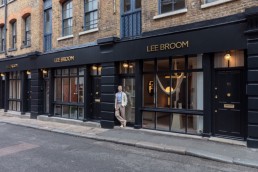
Lee Broom presents newly expanded showroom and lighting editions for LDF
(UK) - Lee Broom launches new lighting collections in its recently expanded showroom in Shoreditch during London Design Festival 2023.
The showroom extension marks a further expansion of the brand, which first opened on Rivington Street in 2010, before taking over the whole store frontage 16 years after the company was founded.
The interior has been redesigned to display a wide selection of Lee Broom furniture, lighting, and accessories, in celebration of the most iconic designs in the last 16 years including Lens Flair, Orion, and the Hanging Hoop chair.
Alongside the new pieces, Broom’s acclaimed collection, Divine Inspiration, is prominently displayed within the showroom, with Pantheum now exhibited in the showroom’s extended shopfront.
The limited-edition Requiem Hoop and Globe lights, designed in editions of 15 to celebrate the brand’s 15thanniversary, are also hung within the space, as well as a curated display from the collection including Hail and Vesper, and new editions including Altar wall lights and Chant surface lights.
Lee Broom says: “I opened my Shoreditch showroom in 2010, three years after I founded Lee Broom, and so the connection between the brand and this iconic building on Rivington Street is a special one, especially given Electra House’s history as an electro plating factory for designer furniture including Conran back in the day. We look forward to this next stage of our growth with this esteemed building, and it has been great to celebrate another edition of London Design Festival within the space.”
www.leebroom.com
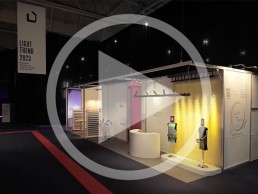
10 year anniversary by Akari-Lisa & Motoko Ishii, Maison&Objet fair
https://youtu.be/mvE9450aqPI?si=Ba4aPENiPPbQ-PmP
This year's show followed the theme 'Enjoy!' that drew an overall mindset of enthusiasm and excitement among the professional community of the design, home decor and lifestyle industries.
Exhibitors and the numerous programmes (xx) were curated by Maison&Objet to create unique experiences and inspire visitors that have led buyers and brands to develop new business trends, thereby supporting the market towards the end of 2023.
As a part of Maison&Objet, the Lighting Trend exhibition by famous Franco-Japanese lighting designers Akari-Lisa Ishii and Motoko Ishii celebrates its 10th anniversary. Follow the video to explore the state-of-the-art artistic installations and its reinventions.
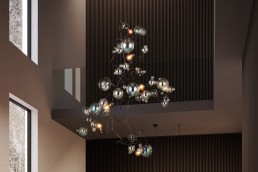
Bubbles - Brand Van Egmond
Bubbles, designed by William Brand, is reminiscent of the child-like delight of blowing bubbles and being mesmerised by the free forming colours and shapes. The hanging lamp is available in five different finishes including: black matt, nickel, brass burnished, gold satin and bronze patina. All creations have a unique distinctness due to its hand-made manufacturing process like the colourful patina, grinding structure and glass characteristics.
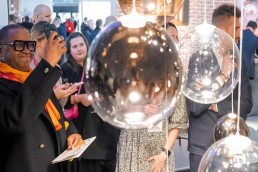
LiGHT23 Introduces Exclusive Space for Decorative Lighting
LiGHT23 Expo will extend its exhibitor space with a new exclusive area for decorative brands called ‘darc space’.
In collaboration with darc magazine, darc space is to provide a one-stop shop for designers and specifiers looking for stunning light pieces. Some of the brand’s that have confirmed their participation include Quasar, Lodes, Tyson Lighting, Artemide and Zico Lighting to name just a few.
The inaugural expo in 2022 was a huge success with more than 3,500 visitors attending including interior designer, architects, and lighting designers and more than 100 high-end lighting brands exhibiting. LiGHT returns to London from 21-22 November with a bigger exhibition alongside new and exclusive features for visitors.
New for 2023 is the Associations Lounge, which will be the shared home of the International Association of Lighting Designers (IALD) and the British Institute of Interior Design (BIID) over the two-day period.
Designed and furnished by leading Furniture brand Muuto, the two associations will host existing and potential members in the space, while running various social activities. On the opening day, the IALD will be offering a late-night drink offering, while the second day will be taken over by BIID with a LiGHT Lunch following a panel discussion as a part of [d]arc thoughts programme.
Former President of BIID, Susie Rumbold, moderate the panel discussion made up of leading BIID Interior designers Stephen Dick, Stephanie Dias, and Debbie Power on ‘Designing for Small and Large Spaces’. Taking place on 22 November, the talk offers different perspectives on lighting spaces from stadiums to 5-star hotels to the homes from around the world.
The rest of the programme, which has been carefully curated by Darc’s editorial team, will include talks specific for the decorative lighting realm such as ‘Designing for a Global Brand’, ‘In Conversation with Eden, New Bailey’ with Darc Editor Sarah Cullen, as well as a discussion on ‘Restaurant and Bar Design’ with Managing Editor of Darc, Helen Ankers. All talks will run across the two-day period and are free for visitors to attend.
For further details and registration go to www.lightexpo.com.

Barbara Corti announced as the new Chief Creative Officer of Flos
(Italy) – Barbara Corti has been announced as the new Chief Creative Officer of Flos. As CCO, she will set the creative strategy for the development of product lines in every division, as well as content creation strategies through all the brand’s online and offline channels.
Corti, who has been global Chief Marketing Officer at Flos since 2017, will move to her new role as of October 2023 and will be the first to take this position at Flos. CEO Roberta Silva introduced the role as a way of internalising a strategic function while enhancing the talent of a leader.
After graduating with a degree in architecture, Corti worked for 10 years as Creative Director in communication agencies and for seven years in the same role at Condé Nast Italia. Corti has also played an active role in international human rights projects, addressing the issue of Human Rights Design in developing countries.
As CCO, Corti will lead the creative and design team, which will include two important areas: product design and content design. The product design division, in close collaboration with the research & development team of all collections – decorative, architectural, outdoor, and bespoke – will guarantee the central role of designers, who will have access to an array of talent and skills for future projects.
The appointment of Corti’s new role coincides with the end of Flos’s collaboration with Fabio Calvi and Paolo Brambilla in their role as Flos’s Design Curators, which was created specifically for the Milanese duo.
Silva comments: “In 2019 we created the role of Design Curator, starting a very fruitful collaboration with Fabio Calvi and Paolo Brambilla. Now we are ready to take the next step. The time has come to internalise this role, which is fundamental for the success of Flos, through the creation of a new ‘Creative and Design Team’. Barbara Corti will guide this team, becoming Chief Creative Officer.”
Corti adds: “I am very thankful for this splendid opportunity and extremely motivated, not only to continue to strengthen the recognised brand identity of Flos, but also to deeply nourish the inclination to dare and the capacity to explore new territory, which is at the heart of our DNA. My objective to further strengthen the natural playground that Flos represents for the creativity of our designers, are the most important thing.”
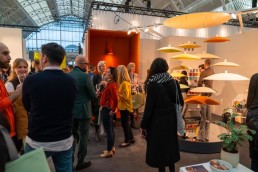
Workspace Design Show returns for 2024
(UK) - Workspace Design Show, the trade show that brings together the UK workplace design community, returns to London’s Business Design Centre for its third UK edition from 27-28 February 2024.
At the 2023 event, visitor number increased by an impressive 75% year on year with exhibitors from over 20 countries showcasing innovative and transformational workplace interiors products. Due to this success, 75% of stand space is already booked for 2024.
The organisers of the Workspace Design Show have unveiled exciting plans for the upcoming February event. This year, the show will revolve around the theme of Bloom: Exploring the thriving ecosystem of work life. One of the standout features will undoubtedly be the raft of collaborations with renowned architects’ practices, promising an unforgettable experience for attendees.
Workspace Design Show allows an opportunity for architects, designers, occupiers, developers, consultants, coworking companies and fit-out companies to explore the latest industry trends, see the latest products as well as find inspiration in the talks programmes.
Gurvinder Khurana, Director of M Moser Associates said: “I would highly recommend attending the show next year, it is a brilliant chance to learn and to meet many people through a shared interest in the design sector.”
Natalie Smith, Principal of Planning and Strategies for Perkins and Will added, “Highly recommend - a show that brings the entire industry together; a great place to network.”
The 40 under 40 Awards nominations open today
(UK) - The 40 under 40, an annual competition where young and talented individuals in lighting in architecture are recognised for their achievements, has now launched the submission for nominations.
The submission deadline will be closing 17 November, and to be eligible for participation nominees must be under the age of 40 on 15 September 2023. Nominations must also be a part of lighting in architecture in some capacity whether it be as a lighting designer, technician, engineer, artist, or architect.
Winners will be announced in January 2024 at Light Building Middle East in Dubai.
To find out more on how to enter go to www.40under40.com.
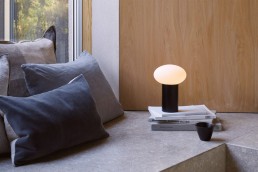
New Lighting Collection from Astro
Astro Lighting has recently launched a new collection using contemporary lighting concepts for hospitality, residential and commercial spaces.
The collection showcases enduring materials such as translucent porcelain and highlights functional and flexible applications, including portable and plug-in options. In addition, Astro now offer ‘Made to Order’ to provide for flexibility and choice for customers.
The new collection offers two new ranges of complete floor, table, wall and wall-mounted reading lights for cohesive lighting schemes. The Venn range brings warm ambient lighting and focused task lighting, ideal for hospitality guest rooms. All Venn lights are inspired by minimalist architecture.
The second rage, Leda, distinctive cylindrical shade is available separately in a range of ‘Made to Order ‘modern finishes. The fixture uses replaceable, long-lasting GU10 lamps, enabling full flexibility in the choice of light colour and brightness. Leda’s lamp head features an innovative, heat-dispersing design which maximises the lifespan of the lamp.
To see the complete collection go to www.astrolighting.com
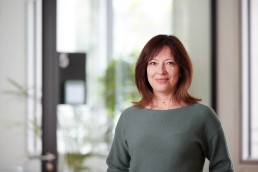
Cundall appoints Natalia Duffy as Birmingham Lighting Associate
(UK) – Global engineering company, Cundall, has broadened its presence in Birmingham with the appointment of Natalia Duffy as the company's first Lighting Associate in the region.
Specialising in lighting design, Duffy has contributed to the successful delivery of projects in a range of sectors including commercial, residential, education, transport, and sports and leisure. She was also the lead designer for the public realm lighting strategy of Paradise, a new commercial and cultural hub that pays homage to Birmingham’s history and allows freedom of movement for pedestrians though the city.
Duffy’s background in both engineering and architecture allows her to combine architectural lighting concepts with engineering aspects in design solutions. In her new role as Lighting Associate, she will collaborate with Cundall’s global lighting team as well as the wider Birmingham design team, contributing her knowledge of lighting software, technologies, and the lighting industry’s policies, adding considerable value to the technical aspects of projects.
Commenting on her new role Duffy says: “I am excited to join Cundall Birmingham and add lighting design to the portfolio of design services already on offer. I have always had a passion for sustainability, and I am grateful to be working as part of a talented and energetic team, for a dynamic company with net zero commitments that resonate with my own personal beliefs and professional initiatives.”
Andrew Parkin, Partner and Global Head of Acoustics at Cundall commented: “The addition of Natalia as a Lighting Associate in our Birmingham office is something we are hugely pleased with. She has extensive experience with external lighting and environmental impact that complements our pioneering Dark Skies preservation work both in MENA and the UK and will help us achieve our ambitious net zero goals.”
Cundall’s lighting team has matured in recent years and now serves a broad geographical base with representation in three UK locations, Birmingham, Manchester, and London, in addition to Singapore, Hong Kong and Australia. Duffy’s new presence in the Birmingham team, demonstrates Cundall’s ambition to grow its lighting team’s geographical base and has plans to grow their presence to Dubai and KSA.